The St canute was in very bad shape indeed
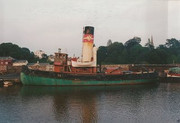
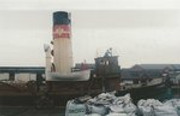
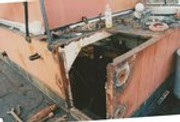
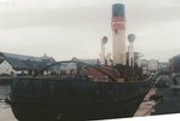 The wooden deck was so dilapidated that, at some point, it was covered with tar in order to reduce rainwater ingress. The master's cabin's wood paneling had rotten away, which made it impossible to access normally. many wood fixtures had simply disappeared, letting rain go inside the boat.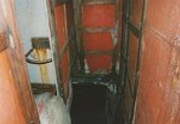
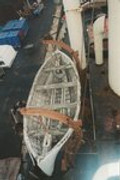
Lifeboats were decaying wood objects ready to sink when lowered into the water.
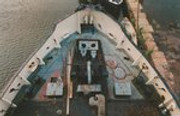
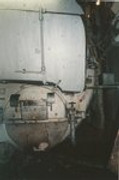
while I concentrated on putting the steam windlass back into operation, fire was put into the boiler to raise pressure overnightA very kind gentleman living on a nearby boat offered me accomodation for the night. He told us the tug had suffered neglect and lack of maintenance for much earlier than the closure of the Maritime museum.
The following morning, steam pressure was high enough to test the whistle which produced a beautiful 2-tone sound. 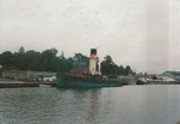
The following morning, there was enough pressure to test the beautiful 2-tone whistle.
Regretfully, despite many attempts, the main 500 HP triple expansion engine would not turn.
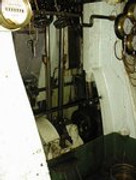
Corrosion due to stagnant water made a sliding seat swell so much that the Piston would not budge.
This issue needed a lot of time to correct. It was one of the many hurdles Mr Strandell faced during his endeavour to bring this tug back home.
Reluctantly plowing my way back through a heavy downpour, I decided to convert my model of the St Canute into a working steam model.
I bought a boiler, a burner, a gas tank and an oscilating two cylinder steam engine from a manufacturer met during a modelling show at Beale Park.
The make was Stour Valley Steam (SVS), built by a very kind gentleman.
Switching from electric power to steam raised many challenges that I was unaccustomed to. One of those was ballasting and weight distribution. I decided to put lead shots on the bottom of the hull,
all trapped in a layer of resin.
Apologies for the lack of pictures. I had no camera at that time.
My internship ended in september 1998 and I quickly got a job in Dublin. Despite being a port and Ireland being an Island, there was much less to see in terms of maritime interests.
Back to my model, I realized the plastic funnel delivered with the kit would melt with the high temperatures of the flue. I decided to rebuilt one in brass
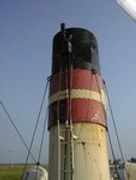
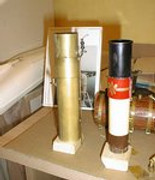
This allowed me to reproduce the oval shape of the real funnel
Model was finished in 1999 and made its first test runs in a pond close to my workplace.
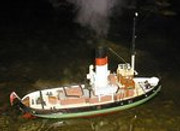
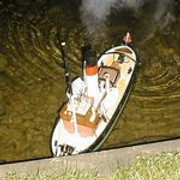
I forgot to mention that the SWA kindly accepted me as a member during my stay in the UK. They offered me a display spot on their booth during the 1998 International Festival of the Seas and another one at the London Model Engineering show of 2001.
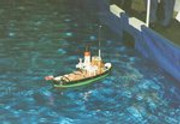
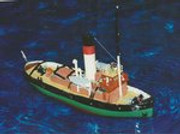
I could even test the model on the basin for a short run.
To be continued